Top 3 DashThis Alternatives 2026
Explore these 3 DashThis alternatives to identify the best marketing reporting software for your needs in 2026.
Getting clear, branded marketing reports for agencies or teams without manual data work is difficult across multiple platforms. Some tools charge steep fees for each client account or limit integrations, which blocks flexible reporting for agencies and marketing teams. This comparison matches reporting software on budget, branding, client volume, and source coverage so teams can choose one that fits without endless testing.
MyContentLab
At a Glance
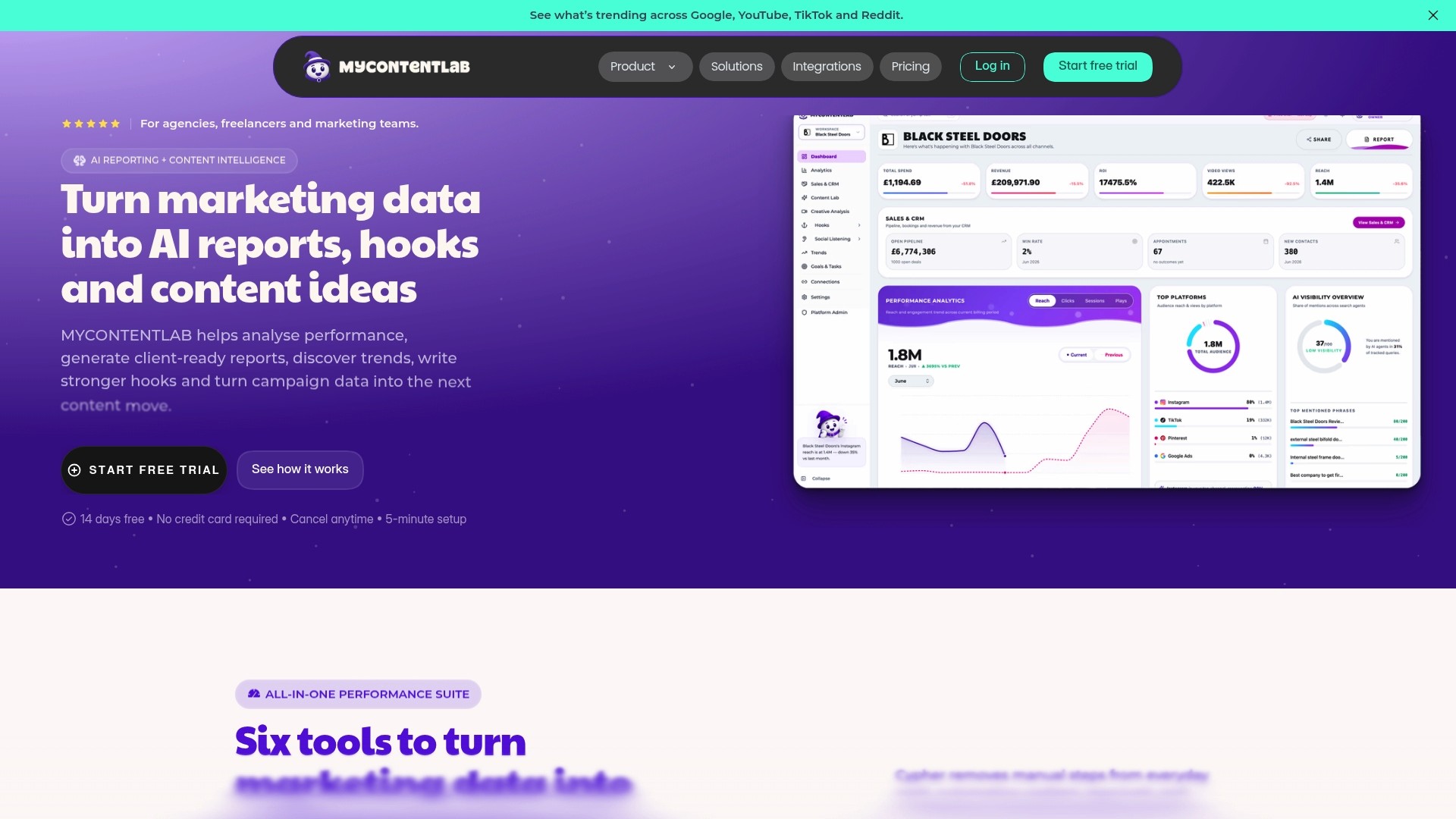
Plans start at £47/month and scale to £497/month for enterprise with unlimited clients. The platform bundles performance analytics, social listening, trend analysis, and content ideation into one workspace. Agencies can apply white label branding to client reports and templates.
Core Features
MyContentLab provides AI reporting that turns raw campaign metrics into concise summaries and period comparisons. The workspace supports cross channel analytics alongside content ideas generated directly from performance data. It adds AI-generated hooks for videos and posts, and includes social listening across social media, Reddit, and web signals for trend and reputation monitoring.
Key Differentiator
The single most distinctive capability is the all in one mix of performance analytics, content intelligence, trend analysis, and social listening with white label options for agencies. That combination lets teams keep listening, insight production, and reporting within one branded environment. Agencies gain a consistent client deliverable without moving data between multiple tools.
Pros
The vendor advertises increased productivity and sharper reporting based on real time data. The platform automates recurring reports and reduces manual spreadsheet work, which speeds client delivery. Agencies benefit from white label options and flexible subscription plans that support multiple clients and unlimited users. AI driven content suggestions and hooks cut creative planning time and help produce more targeted briefs.
Cons
Limited public details about specific integrations and platform customisation.
Who It's For
Marketing teams, agencies, freelancers, and creators who manage several clients or campaigns and need reporting plus idea generation in one place. It suits agencies that sell branded monthly reports or packages and want to centralise listening and trend discovery. Solo creators who need a low cost, single feature tool may find the entry point unnecessary.
Unique Value Proposition
White label reporting combined with the entry price of £47/month lets agencies provide branded, automated client reports at a predictable monthly cost. That pricing plus the unified feature set reduces the need for separate reporting, listening, and ideation tools. For agencies selling retainer services, it simplifies scope and client billing.
Real World Use Case
A mid sized digital agency uses MyContentLab to automate monthly client decks and free staff from manual data wrangling. Analysts pull trend signals from social and web mentions, export hooks for short form video, and add branded slides in minutes. The workflow shortens report turnaround and keeps the same client facing brand in every deliverable.
Pricing
Pricing is tiered and subscription based, with plans from £47/month for solo creators up to £497/month for enterprise. Enterprise tiers advertise support for unlimited clients and broader account management features. Vendors publish custom quotes for very large or bespoke deployments.
Website: https://mycontentlab.ai
Whatagraph
At a Glance
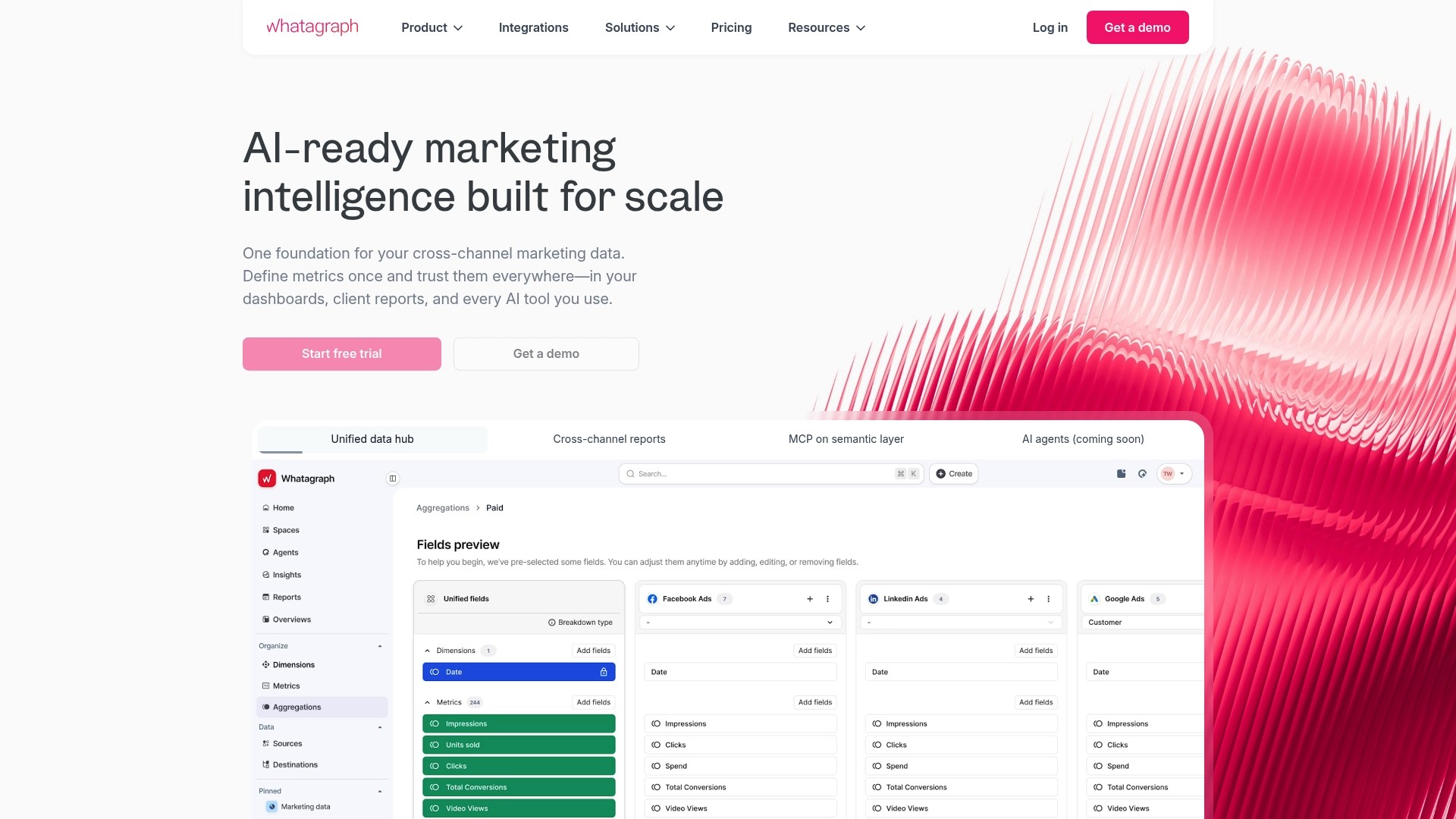
Whatagraph's marketing materials state it connects to over 50 data sources. The platform advertises automated report delivery and live links that reduce manual handoffs. Its copy also claims trust from more than 1,000 agencies and brands, a vendor figure noted here once for context.
Core Features
Whatagraph links social, advertising, SEO, and analytics platforms into unified dashboards and reports. Users build layouts with drag and drop widgets, apply white label reports for client branding, and schedule automated delivery or share live links. The product also includes an AI powered report generator that drafts narrative insights from the data.
Key Differentiator
Whatagraph centres on AI driven report generation combined with scheduled automation for cross channel marketing. That pairing lets teams hand off routine narrative writing and delivery to the platform. Agencies that need frequent branded reports benefit from fewer manual steps and faster client updates.
Pros
The interface is straightforward and quick to set up, so new team members reach productivity faster. Wide integration coverage reduces the need for connectors or manual CSV exports. Automation of scheduled reports and live links cuts repetitive work and keeps clients informed on cadence. Support resources and pre built templates help agencies convert raw metrics into presentable outputs.
Cons
Dependent on API stability for integrations, so data can break if a source changes or disconnects.
Limited options for advanced data modelling compared with custom BI tools and SQL workflows.
Pricing can be prohibitive for solo practitioners or very small teams who need only minimal reporting.
When It May Not Fit
If your team builds bespoke data models or runs heavy custom analysis, this tool may feel restrictive. If you require strict source level control and local ETL, an enterprise BI stack will suit you better. Small teams with tight budgets should compare costs before committing to a plan.
Notable Integrations
Whatagraph lists connections to Google Sheets, BigQuery, Facebook, Google Ads, HubSpot, Salesforce, and Adobe Analytics. The platform also advertises many other native connectors for common marketing systems.
Who It's For
Marketing agencies and in house teams that need repeatable, client ready reporting workflows will find Whatagraph useful. Brands that track multi channel campaigns and want branded dashboards also fit the product profile. The tool suits teams aiming to reduce manual report assembly.
Real World Use Case
An agency sets up weekly client dashboards that pull Google Ads, Facebook, and Google Analytics data. Templates format metrics and commentary. Automated delivery sends the report on schedule and frees account managers from exporting CSVs.
Pricing
Compare plans and start a free trial on their website. Specific tier names and starting prices are not listed here and must be checked on the vendor site.
Website: https://whatagraph.com
Two Minute Reports

At a Glance
Two Minute Reports it is trusted by over 4,000 agencies worldwide. The product links more than 30 marketing and commerce sources and delivers branded reports that include AI-generated commentary. The platform targets teams that need scheduled, client-ready reporting with real-time data blending and error alerts.
Core Features
The product connects advertising, web analytics, SEO, social media, and e-commerce sources and automates report scheduling and delivery. It offers white-label templates for logos and colours, real-time data blending across channels, and AI-powered commentary using ChatGPT and Claude for trend detection and performance notes. The system also supports Google Sheets and Looker Studio for custom calculations and visual exports.
Key Differentiator
A single focus on rapid, branded reporting sets this product apart. It combines multi-source data blending with automated delivery and embedded AI commentary so agencies can produce polished client reports without manual assembly.
Pros
Two Minute Reports cuts manual reporting time by automating data pulls and scheduled deliveries. Pre-built templates and white-label options let agencies keep client communications on brand while reducing design work. Real-time error alerts help maintain report accuracy, and the broad source coverage means fewer missing channels during month end reconciliations.
Cons
Setup for complex data sources can require technical effort and mapping of metrics.
Pricing tiers escalate for larger teams that need extra accounts, users, or advanced features.
The platform depends on internet connectivity for live updates and scheduled deliveries.
When It May Not Fit
Organisations with very bespoke data pipelines or strict on-premise requirements will find the connection model limiting. Teams with large numbers of seats and accounts should budget for higher tiers. Agencies that need native time tracking or project management should plan to combine this with a separate tool.
Notable Integrations
Google Analytics 4 and Google Ads for web measurement and paid search reporting.
Shopify and Amazon Ads for e-commerce performance and attribution.
Facebook Ads, Reddit Ads, and major ad platforms to centralise paid channel metrics.
ChatGPT and Claude for generated commentary and trend summaries.
Who It's For
Agencies and in-house digital marketing teams that deliver regular client reports and want branded, repeatable outputs. Teams that rely on several ad platforms, a commerce store, and web analytics will get most value from the multi-source blending. Data-driven marketers who need fast, presentable reporting without building custom dashboards benefit most.
Real World Use Case
An agency links Facebook Ads, Google Analytics, and Shopify, then schedules weekly branded reports for multiple clients. The platform compiles cross-channel KPIs, flags anomalous drops with real-time alerts, and appends AI commentary to highlight trends and suggested areas to investigate. That workflow saves the team hours of manual compilation each reporting cycle.
Pricing
Plans start at $9/month for a Lite plan and increase with additional accounts, users, and features. Higher tiers and custom enterprise plans are available for teams that need more accounts or bespoke integrations.
Website: https://twominutereports.com
Comparison of alternatives
Marketing and analytics teams seeking integrated solutions for campaign performance, content ideation, and client reporting have several platforms to consider, each offering distinct capabilities. Evaluating these options reveals key strengths in different dimensions valuable to potential users.
Integration capabilities and data handling
Whatagraph excels in integration breadth, connecting over 50 data sources, including renowned marketing platforms such as Google Ads and HubSpot. This extensive compatibility ensures that businesses can unify their tools effectively, reducing the need for additional connectors. On the other hand, MyContentLab and Two Minute Reports provide integration options focused on multi-source data blending and cross-channel analytics, appealing to teams with specific blend requirements.
Proprietary report automation
Two Minute Reports stands out by incorporating AI-driven commentary into report functionalities, powered by systems like ChatGPT. This feature appeals to teams focused on AI-enhanced insights. MyContentLab, however, integrates its report tools with AI-generated hooks and ideas for creative planning, creating a unique workspace distinct from competitors who solely concentrate on reporting. Whatagraph provides real-time dashboard capabilities and simplifies scheduled client report generation, valuable for teams requiring constant operations visibility.
Best fit
Agencies requiring white-label insights delivery will benefit from MyContentLab's design, which supports consistent brand representation across client materials.
Teams prioritising integration compatibility across numerous marketing tools will find Whatagraph's expansive data connections particularly advantageous.
Businesses needing blended data solutions with automated commentary to highlight trends can leverage Two Minute Reports, especially for handling complex client reports.
Our pick
MyContentLab sets itself apart through its unified approach, combining analytics, performance monitoring, ideation, and white-label reporting within one workspace. This offering reduces reliance on multiple tools, streamlining workflows and ensuring brand consistency for agencies. However, for teams emphasising other priorities such as extended integration coverage, tailored AI-driven commentary, or comparable operations under a different scope, evaluating competitors presents a clear alternative.
Comparing marketing reporting software options reveals critical differences in features, pricing, and usability tailored to varied team needs.
Product | Core Feature | Key Differentiator | Best For | Pricing | Limitation |
|---|---|---|---|---|---|
Mycontentlab | Performance analytics with AI summaries | Unified analytics and reports with white label | Agencies and content managers | £47–£497/month | Limited details on integrations |
Whatagraph | Drag-and-drop dashboards and white label reports | AI narrative generation and automation | Marketing agencies and in-house teams | Price not published | Reliant on API stability |
Two Minute Reports | AI-generated commentary and white label reporting | Multi-source data blending with alerts | Agencies needing rapid reporting | $9/month and up | Requires effort for complex source setup |
How Can Agencies Improve Reporting with Mycontentlab Beyond DashThis Alternatives?
Marketing agencies, freelancers, and in-house teams often face challenges juggling multiple tools for campaign analysis, content ideas, and client reports. Mycontentlab offers a single workspace that unites real-time performance data, social listening, and content generation, eliminating manual data wrangling and fragmented workflows. This approach helps users deliver sharper, timely client reports that reflect actual campaign outcomes.
Key benefits include:
Automated, branded reports suitable for multiple clients
AI-driven content hooks that support campaign creativity
White label options that maintain consistent agency branding
Discover how Mycontentlab can help your team reduce reporting delays and generate briefings aligned to real data. Visit Mycontentlab to see how the platform supports agencies looking for powerful alternatives to DashThis.
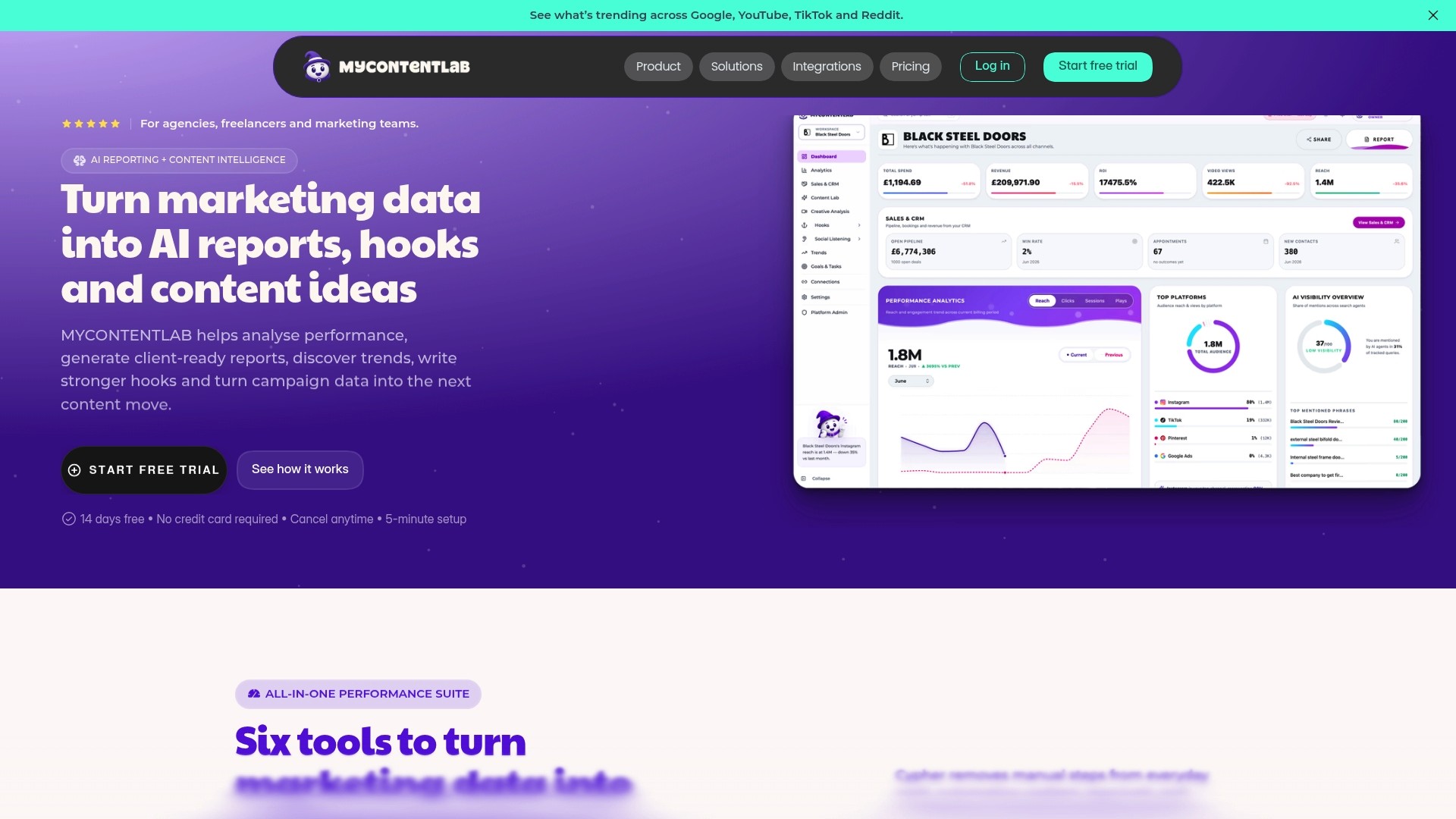
Get started with Mycontentlab today and produce client-ready reports in a fraction of the time it takes with conventional tools. Visit Mycontentlab to streamline your reporting and boost your team’s clarity and delivery.
FAQ
How does Mycontentlab support reporting and idea generation?
Mycontentlab provides comprehensive performance analytics and content ideation within a single workspace. The platform generates AI-driven content ideas directly from performance data, which aids users in creating targeted marketing strategies. Agencies looking for efficient reporting and creative insights will find Mycontentlab particularly helpful.
What is the difference between Mycontentlab and Whatagraph?
Whatagraph excels in automated report delivery and offers seamless integration with over 50 data sources. In contrast, Mycontentlab focuses on a unified blend of performance analytics and AI-generated suggestions, making it ideal for agencies that want everything in one branded environment. Choose Mycontentlab if you're centring on integrated reporting and creative ideation.
Which platform offers better support for social listening?
Mycontentlab includes robust social listening capabilities that monitor social media, Reddit, and web signals for trend analysis and reputation monitoring. This feature equips agencies with insights to adapt their strategies based on audience feedback. It is particularly advantageous for teams prioritising real-time insights into brand perception.
Can I use Mycontentlab if I manage multiple clients?
You can use Mycontentlab to manage multiple clients since it supports unlimited users and allows flexible subscription plans. The white label options let agencies create branded reports, which streamlines client management and enhances deliverables. Expect a unified reporting structure that simplifies your workflow across various projects.
How often can I expect updates from Mycontentlab?
Mycontentlab automates the generation of recurring reports, allowing you to receive updates based on real-time data. This feature helps reduce manual work and speeds up client delivery, which is useful for agencies needing consistent, timely insights. This ensures that you remain informed without a significant time commitment.
Recommended


Jul 19, 2026


Search



You can also read
Category
All
Compare
Marketing Reporting
Agency Operations
Content Intelligence
Brand Monitoring
Platform Reporting